

 Pascal Persyn
Customer expectations are evolving faster than ever. Not because buyers are unpredictable – but because their world has become increasingly complex. Decision-making stalls not due to a lack of information, but because there’s too much of it. Conflicting opinions, fragmented buying centers, and a flood of content all lead to confusion and inertia.
In this environment, the role of commercial teams has fundamentally changed. It’s no longer about who can pitch the best product. What customers truly need now is clarity, guidance, and trust.
That’s why Perpetos has identified five essential disciplines for commercial teams that want to stay relevant and impactful. Together, these disciplines form the foundation of 360° Customer Centricity – a systemic model that transforms individual strengths into collective commercial effectiveness.

1. Collaborative Leadership
True commercial excellence starts with leadership that fosters rhythm and the right mindset. Rather than just managing KPIs, strong leaders create a learning culture where team members collaborate, learn from each other, and continuously improve. They use live opportunities as learning moments and ensure everyone knows what’s expected – without micromanaging. Most importantly, they lead by example.
When leaders “walk the talk,” it becomes the catalyst for long-term culture change.

2. Bringing Value
It’s no longer about what you offer – it’s about what your customer becomes capable of through your involvement. Value lies in enabling better decisions. Teams that excel at this discipline help customers make sense of their situation, align internal stakeholders, and reduce friction in the buying process. They know who to engage, when, and how – adapting to the decision-making maturity of each buying center.
The outcome: fewer stalled deals, faster decisions, and deeper partnerships.

3. Building Trust
Trust doesn’t just happen – it’s earned through consistent relevance and deep understanding. This discipline goes beyond good rapport. It requires the ability to read the room, understand different perspectives, and help stakeholders align despite their differences. Teams who master this know how to surface hidden concerns and misalignments in a way that fosters collaboration.
The result: decision confidence grows, and internal friction gives way to progress.

4. Building Momentum
Many deals fall apart not because of resistance – but because momentum fades. This discipline is about staying involved and relevant without applying pressure. High-performing teams create consistent, well-timed interactions tailored to each stakeholder’s preferences. They mix asynchronous updates with informal check-ins, always adding value.
These micro-engagements reignite interest, introduce new angles, and keep opportunities moving without triggering defensiveness.

5. Modern Selling
Modern selling isn’t about using more tools – it’s about blending digital and human interactions into one cohesive experience. It demands digital fluency and human sensitivity. Whether it’s a short video update, personalized follow-up, or insight-rich content aligned to buying signals – what matters is context and timing.
Teams who master this discipline stay relevant and visible, even when they’re not in the room.

In Summary: These five disciplines form a connected system to help commercial teams stay effective in a world of shifting customer expectations. It’s not about selling harder – it’s about enabling smarter decisions in complex environments. When executed well, they build trust, accelerate value creation, and transform commercial performance from a collection of activities into a strategic advantage.
360°
Buyer Alignment
Effective Selling Skills
Personal Connection
Digital Enabled Commercial Activities
Bringing value
Building trust
Building rapport
Modern selling
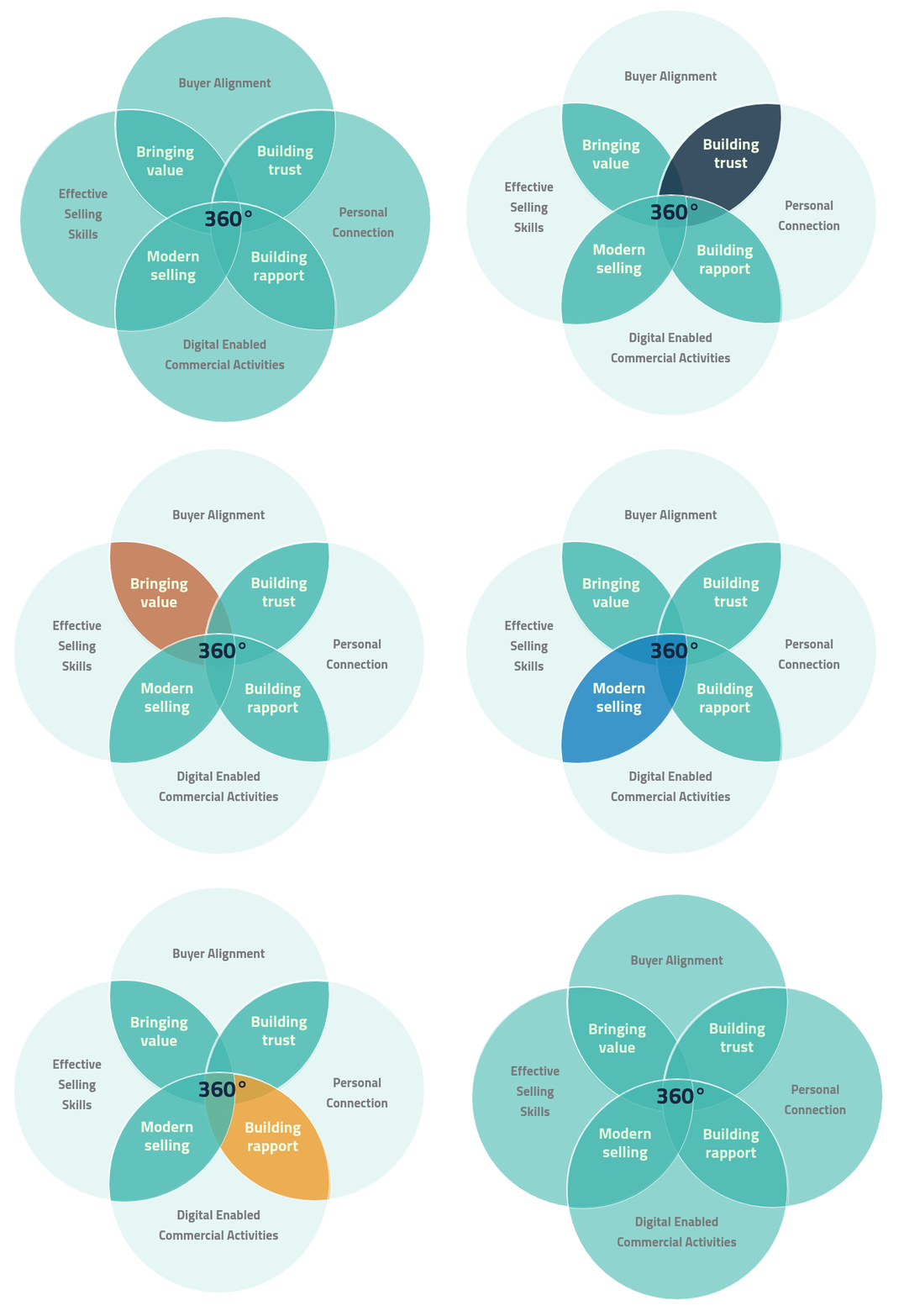
Building trust: create and build trust by being attuned to each step in the buying process of those involved. Only then will the customer be open to heeding your value-adding messages.
How do you create trust throughout the stakeholders coping with diversity in roles, expectations, personalities, buying phases, …?
How do you align your touchpoints, adapt your messaging and the value you bring to further enhance trust?
Indeed, all four disciplines are vital for success.
Bringing value: lies at the interface between sales skills and alignment to the customer's real needs.
Is it clear to the customer what your benefits mean to him?
Is the value you think you bring also the value the buyer hopes to buy?
Does the value you bring translate to information the customer needs to speed up or shorten the buying cycle?
What digital enabled activities are you planning along the buying cycle and how are these taking into account different personalities and communication preferences, to enhance personal connections and build trust and rapport ?
Indeed, all four disciplines are vital for success.
Building rapport: strengthen the relationship with the people involved, by taking into account the personality and communication preferences of each person. (People Skills)
Are you able building rapport with all relevant stakeholders?
What is the impact on your relationship(s) if you are not aligned to their (individual) buying cycle or not bringing the right value in each phase?
What content can you use to stay relevant during your touch points to strengthen your relationship(s)?
How can you create more engagement?
Indeed, all four disciplines are vital for success.
Modern Selling: more and shorter contact moments have been adopted by the mandatory digital contact moments during the lockdown. Are you using the right mix of all communication channels to become and stay 'top of mind'?
How do you align your mix to the different phases of the individual buying cycle of the stakeholders?
What if you don’t have the necessary info on where they stand?
How can you still enhance your relationship(s) by using less face-to-face and more digital contact moments?
What is the impact of this on your understanding into where the customer is in the buying cycle?
Indeed, all four disciplines are vital for success.